Speakers
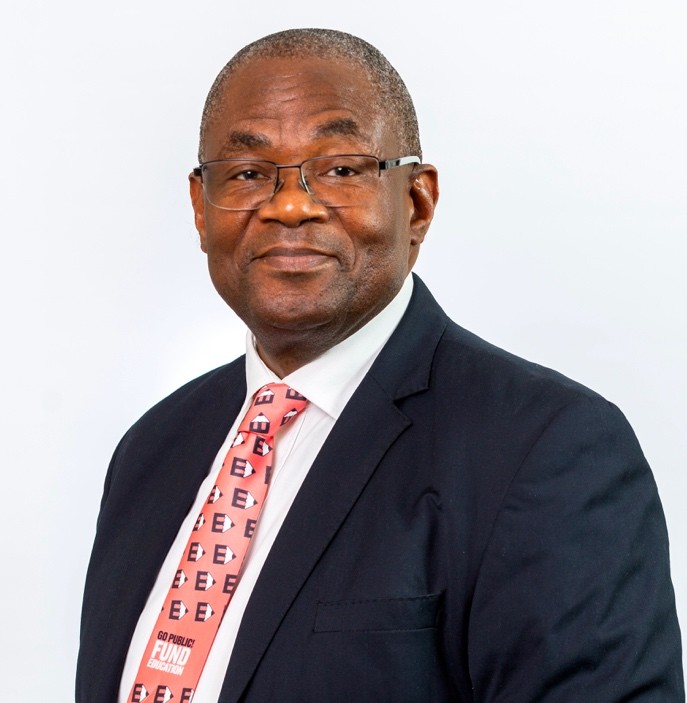
Dr. Mugwena Maluleke
General Secretary of SADTU & President of Education International
Dr. Mugwena Maluleke currently holds the positions of General Secretary of the South African Democratic Teachers’ Union (SADTU), the largest union in the public service in South Africa, and President of Education International, the largest global federation of teacher unions. He also serves in several governance and advisory roles related to pensions, investment, student financial aid, curriculum, and quality assurance. His academic background includes LLD, LLM, and MBA degrees, and he is currently pursuing a Doctorate in Business Administration. He has facilitated domestic and international round tables and webinars on democracy, anti-racism, trade, human rights, and has co-published more than six peer-reviewed articles/papers in education. He is passionate about teacher well-being and calls on governments to invest in quality public education now. Go Public!

Mr. Mohamed Gawdat
Entrepreneur, Former Chief Business Officer at Google X, Author of “Solve for Happy”
Mohamed Gawdat is an Egyptian entrepreneur and the former Chief Business Officer at Google X, widely recognized for his work on innovation and disruptive technologies. He earned a degree in Civil Engineering from Ain Shams University in 1990 and began his career at IBM Egypt as a systems engineer before moving into sales. He held leadership roles at BAT and later spent seven years at Microsoft, where he led the telecommunications sector across emerging markets globally. In 2007, he joined Google to build the company’s business in emerging markets, and in 2013 moved to Google X, where he led global business strategy and partnerships for future-focused projects. He helped develop pioneering business models that enabled Google X to advance high-impact frontier technologies. Beyond his corporate roles, Gawdat is a serial entrepreneur who has co-founded more than 20 companies across health, technology, and real estate, and he serves on multiple advisory boards in the Middle East and Eastern Europe. He is the author of “Solve for Happy” (2017), dedicated to his son Ali, presenting a practical framework for understanding and managing happiness.

Dr. Carlos Vargas
Chief, Section for Teacher Development, UNESCO & Head of the Secretariat of the International Taskforce on Teachers for Education 2030
Dr. Carlos Vargas is a sociologist of education who specializes on global education policy. His research and publications focus on the relationship between education, human rights and well-being; the orientations and discourses of public policy and their effects on society. He has worked for universities, civil society, international organisations and local governments across the globe implementing lifelong learning policies and analysing their intersection with equity, inclusion, and social justice. Since 2015, he works for UNESCO, where he has coordinated research on the social relevance and cultural pertinence of education in five continents and led the Organization’s work on teachers, inclusion and lifelong learning in Latin America and the Caribbean. At present, he leads the Section of Teacher Development at UNESCO’s Headquarters, in Paris, and the Secretariat of the International Taskforce on Teachers for Education 2030.
ورقة العمل
Dr. Manos Antoninis
Director of the Global Education Monitoring (GEM) Report – UNESCO
Manos Antoninis has been the Director of the Global Education Monitoring (GEM) Report since 2017, having been previously responsible for the monitoring section of the report. He coordinated the financing gap estimates for the 2030 education targets, the projections on the achievement of universal primary and secondary education completion, and the World Inequality Database on Education. He represents the report team in the Education Data and Statistics Commission, of which he is currently co-chair.
ورقة العمل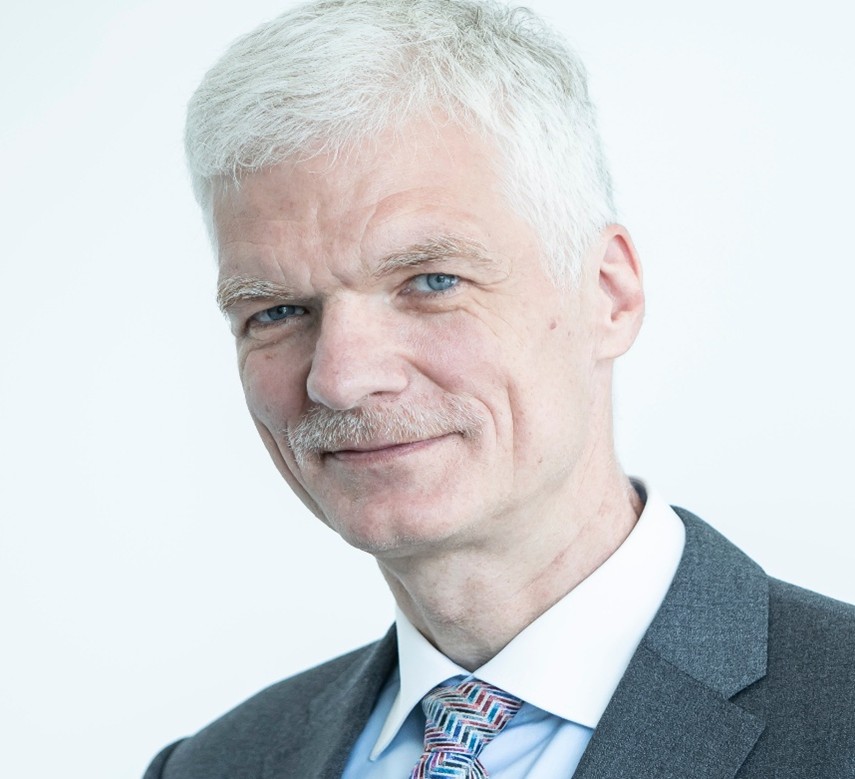
Prof. Andreas Schleicher
Director for Education and Skills – OECD
Andreas Schleicher is Director for Education and Skills at the Organisation for Economic Co-operation and Development (OECD). He initiated and oversees the Programme for International Student Assessment (PISA) and other international instruments that have created a global platform for policy-makers, researchers and educators across nations and cultures to innovate and transform educational policies and practices. He has worked for over 20 years with ministers and education leaders around the world to improve quality and equity in education. Before joining the OECD, he was Director for Analysis at the International Association for Educational Achievement (IEA). He studied Physics in Germany and received a degree in Mathematics and Statistics in Australia. He has received numerous honours and awards, including the “Theodor Heuss” prize, and holds an honorary professorship at the University of Heidelberg.

Dr. Shwetlena Sabarwal
Lead Economist – World Bank
Dr. Shwetlena Sabarwal is a Lead Economist at the World Bank. She is the lead author of the World Bank’s flagship report, “Choosing our Future: Education for Climate Action and Green and Digital Skills as a Pathway to Jobs.” She has co-authored other flagship products, including “The Changing Nature of Work,” the Learning-Adjusted Years of Schooling metric within the Human Capital Index, and global estimates of COVID-related learning losses. Her research has been published in prominent journals, and she has led the World Bank’s education engagement in Bangladesh, Nepal, Saudi Arabia, Tanzania, and Uganda.
ورقة العمل
Dr. Ibrahim bin Abdullah Al-Zaben
Education Advisor, Program Management Department – Arab Bureau of Education for the Gulf States
Dr. Ibrahim bin Abdullah Al-Zaben is a Saudi academic and educational expert with over 25 years of experience in teaching, supervision, and training. He holds a Bachelor degree in Arabic Language at the College of Education at King Saud University, a Master degree in Syntax and Morphology, and a PhD degree in Applied Linguistics at the Institute of Arabic Language Teaching at Imam Muhammad ibn Saud Islamic University. He started his career as an Arabic language teacher. Then, he worked as an educational supervisor at Riyadh Education Department, and prompted to be as an Assistant Head of the Arabic Language Department. He participated in several overseas training program representing Saudi schools in Ankara for four years and delivered over 200 training hours as a central trainer specialized mainly in active learning strategies and the competencies of "Lughati" modules. He currently serves as a consultant at the Programs Management Department at the Arab Bureau of Education for the Gulf States, contributing actively in the supervision of several programs, studies, and research projects. He is the author of book entitled "Linguistic Borrowing in Contemporary Arabic Dictionaries" and a member for several Gulf educational committees and councils. He has also participated in national and regional conferences and forums and possesses strong digital skills, including proficiency in Microsoft Office, designing, and smart applications.
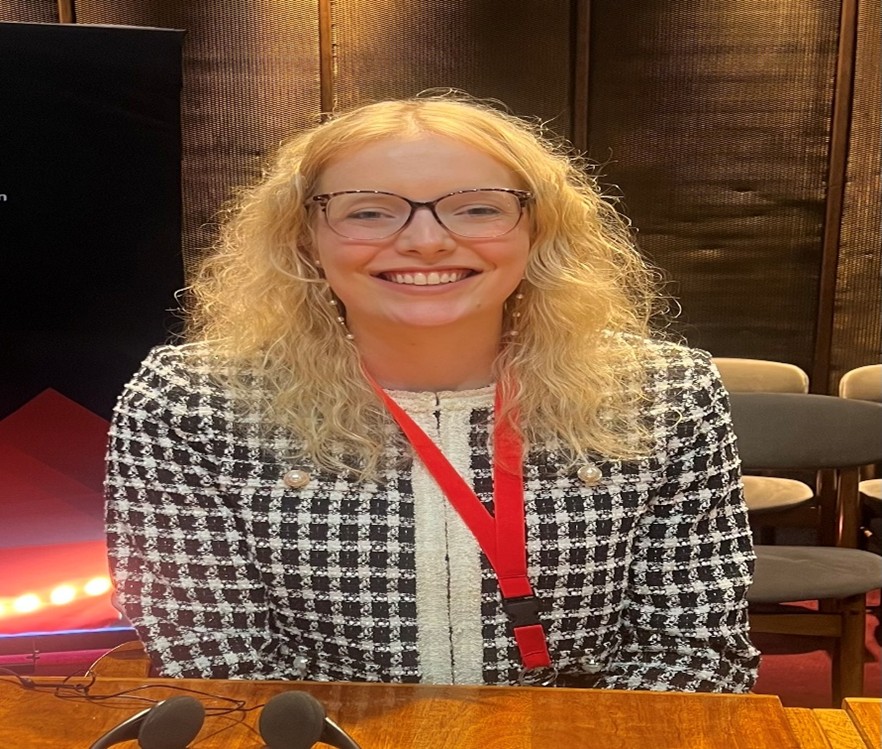
Dr. Amanda Abrom
Director, Global Schools Program – UN Sustainable Development Solutions Network (SDSN)
Amanda Abrom is an American education and sustainability specialist, currently serving as Director of the Global Schools Program at the UN Sustainable Development Solutions Network (SDSN). She leads initiatives that help primary and secondary schools integrate sustainable development, global citizenship, and SDG-aligned practices, reaching over 300,000 students and 100,000 community members worldwide. Amanda has professional experience in education across the United States, Chile, and Spain, and has collaborated with organizations such as the Columbia Earth Institute, Education Cannot Wait, and the UN Joint SDG Fund. She holds a Master’s in International Affairs from Columbia University, an MPA from the London School of Economics, and an Honors Degree in Economics from the University of Delaware. She is a Fulbright Scholar, WISE Emerging Leader, Aspen Future Leader, and NAAEE 30 Under 30 awardee.
ورقة العمل
Chan Vee Bun
External Consultant – NIE International, Singapore
Chan Vee Bun is an external consultant for NIE International, Singapore, since 2008, specializing in school leadership, management, and effective teaching practices. He previously served 12 years as an education officer in Singapore’s Ministry of Education, working in primary and secondary schools. He has extensive experience in curriculum development, instructional design, and fostering professional learning communities to enhance teacher competencies and student learning. He has provided guidance and training to educational institutions and government bodies across Asia, the Middle East, and Africa, including schools and ministries in India, Japan, Singapore, Vietnam, Azerbaijan, Bahrain, Qatar, China, Cambodia, Indonesia, Rwanda, Saudi Arabia, and Timor Leste. His research interests include professional development, design thinking, innovation management, and building resilient and sustainable school cultures.
ورقة العمل
Josh
Director of Technology and Innovation – Stanford Accelerator for Learning, USA
During his seven years as an educator, Josh worked in public and private schools in the United States and Brazil as a literature instructor. In his current role as Director of Technology and Innovation at the Stanford Accelerator for Learning, he serves as a bridge between learning and technology. Josh and his team partner with emerging projects to boost the design, development, and dissemination of digital learning. His work also explores the intersection of cutting-edge technologies and education research, particularly to support under-served learners. He holds bachelor’s degrees in Political Science and Spanish from Emory University, a master’s in Education from the University of Alabama, and a master’s in Digital Media Design from Harvard.

Reuben Thiessen
Emerging Technology Lead – Stanford Accelerator for Learning, USA
Reuben Thiessen is a learning technologist at the Stanford Accelerator for Learning, where he bridges research and practice in AI+Education and other emerging technology projects like experiential virtual media. He co-develops solutions with research-backed innovations, supporting the Accelerator’s Seed Grant program, GSE researchers and faculty, and collaborative initiatives in AI literacy. He creates workshops, professional development sessions, and open-source facilitator toolkits—including Build-a-Bot and inclusive AI co-design sessions—that empower educators to integrate and create with AI. He holds an M.A. in Education (Learning Design and Technology) from Stanford University and a B.Sc. in Aeronautics from Embry-Riddle Aeronautical University.

Matt Tompkins
AI Product Manager at the International Baccalaureate (IB)
Matt Tompkins is the AI Product Manager at the International Baccalaureate (IB), leading organisation-wide initiatives to apply AI responsibly across strategy, governance, product delivery, and change management. His work bridges technical AI capabilities with educational practice, focusing on how AI can support learning while protecting student privacy and academic integrity. Previously, Matt was a Head of Product in the EdTech sector, building AI-enabled learning solutions for organisations including L’Oréal, Apple, and HP.

Will Mortimore
Senior Assessment Solutions Manager at the International Baccalaureate (IB)
Will Mortimore is a Senior Assessment Solutions Manager at the International Baccalaureate (IB). He works in the area of system consultancy, with a particular specialism in assessment. He is interested in evidence-informed education system reform, as well as the effective implementation of AI in education as a means to improving learning outcomes. Together with the system consultancy team, Will works to support ministries with effective system-level change, incorporating elements of the IB education philosophy into that work. As part of his role in the IB, he has been researching the use of AI in education, particularly as it relates to pedagogy and findings from the field of cognitive science. Prior to joining the IB, Will was a teacher for 9 years, holding various departmental and pastoral leadership roles. He has taught in international schools in the UK and East Africa, predominantly as an English and Theory of Knowledge (TOK) specialist.